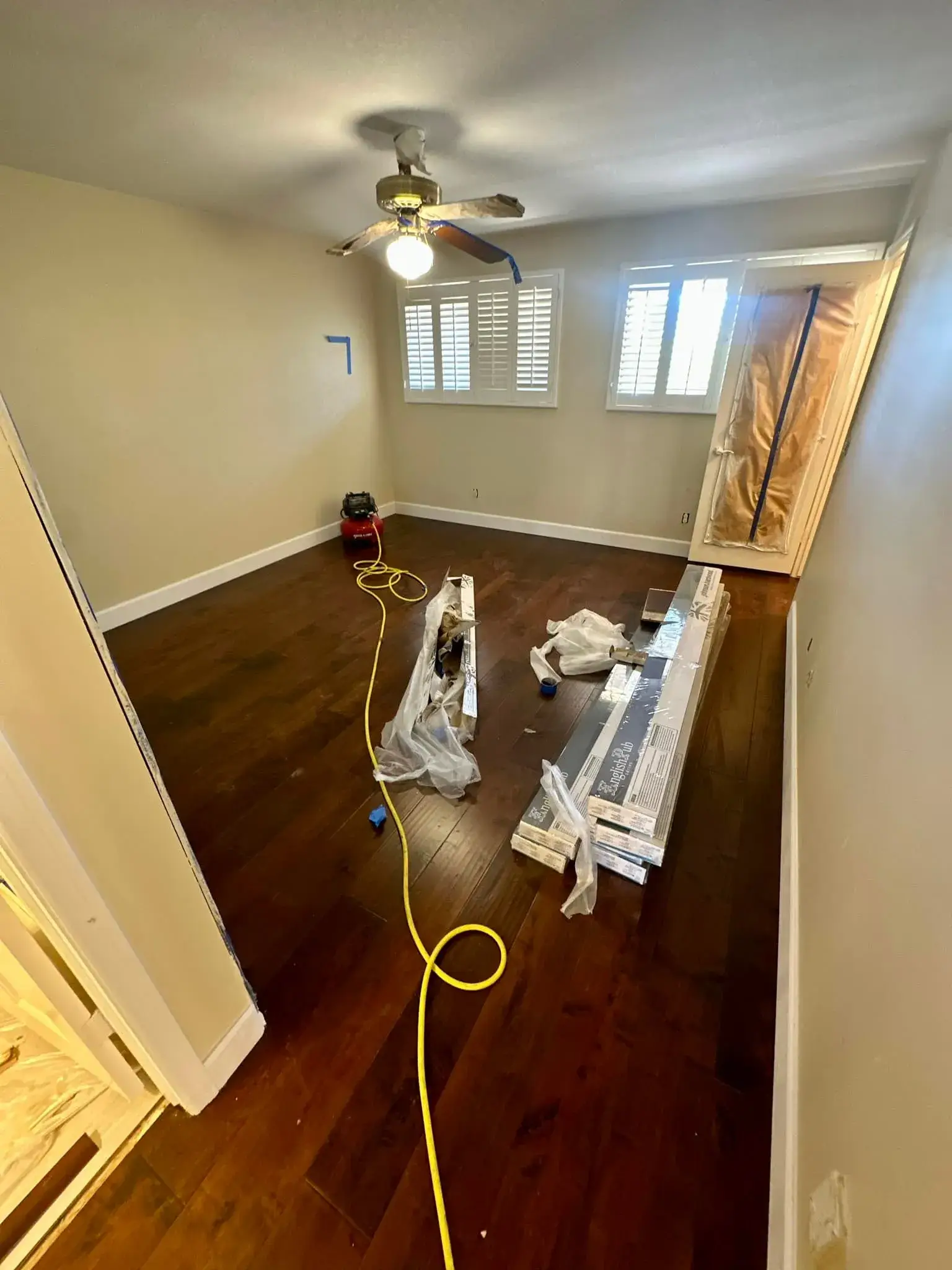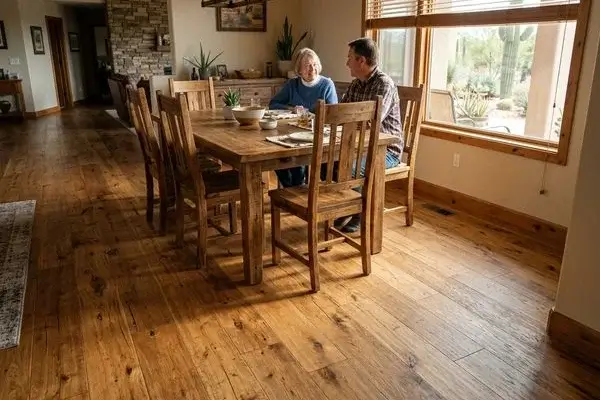
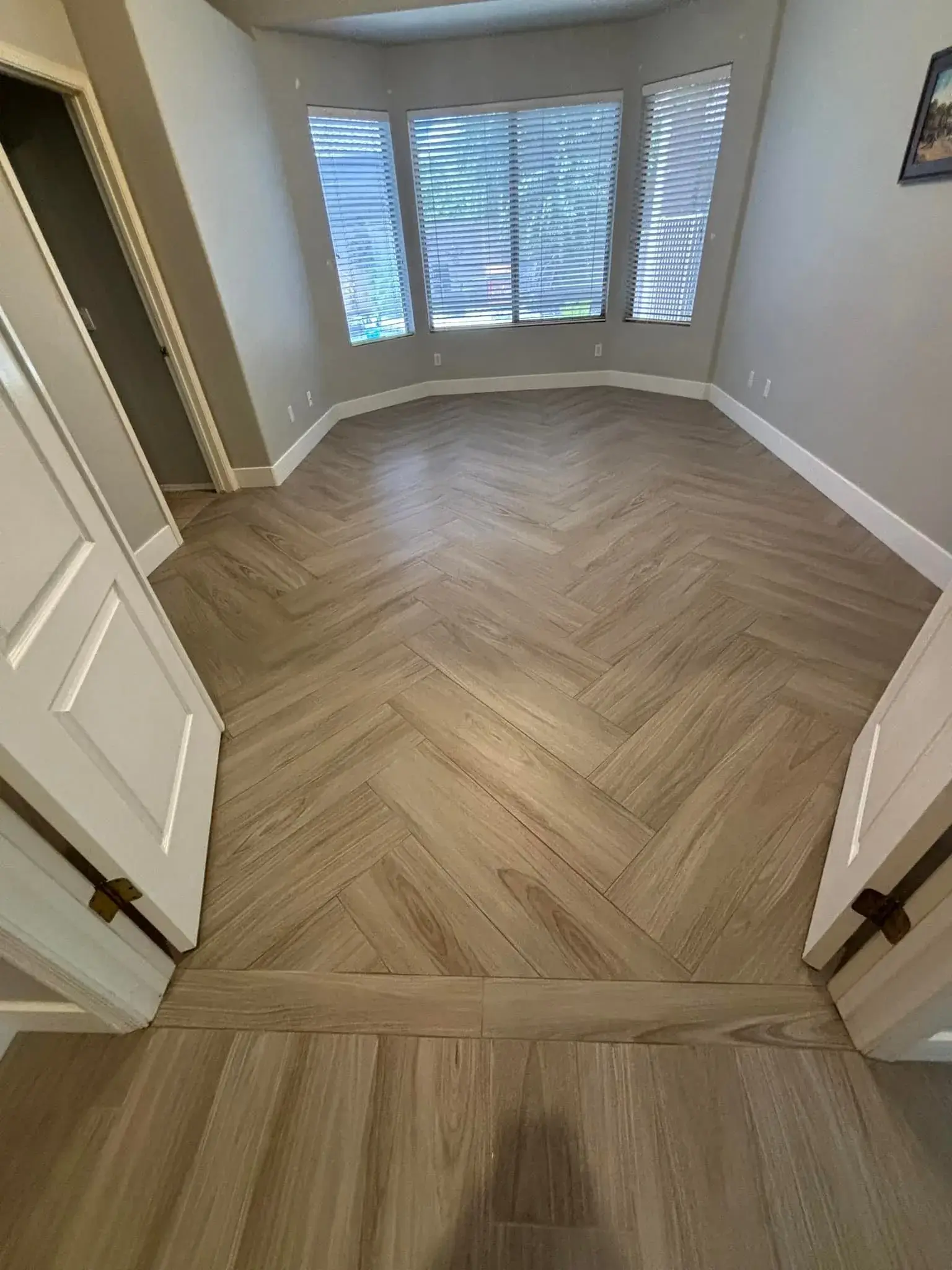
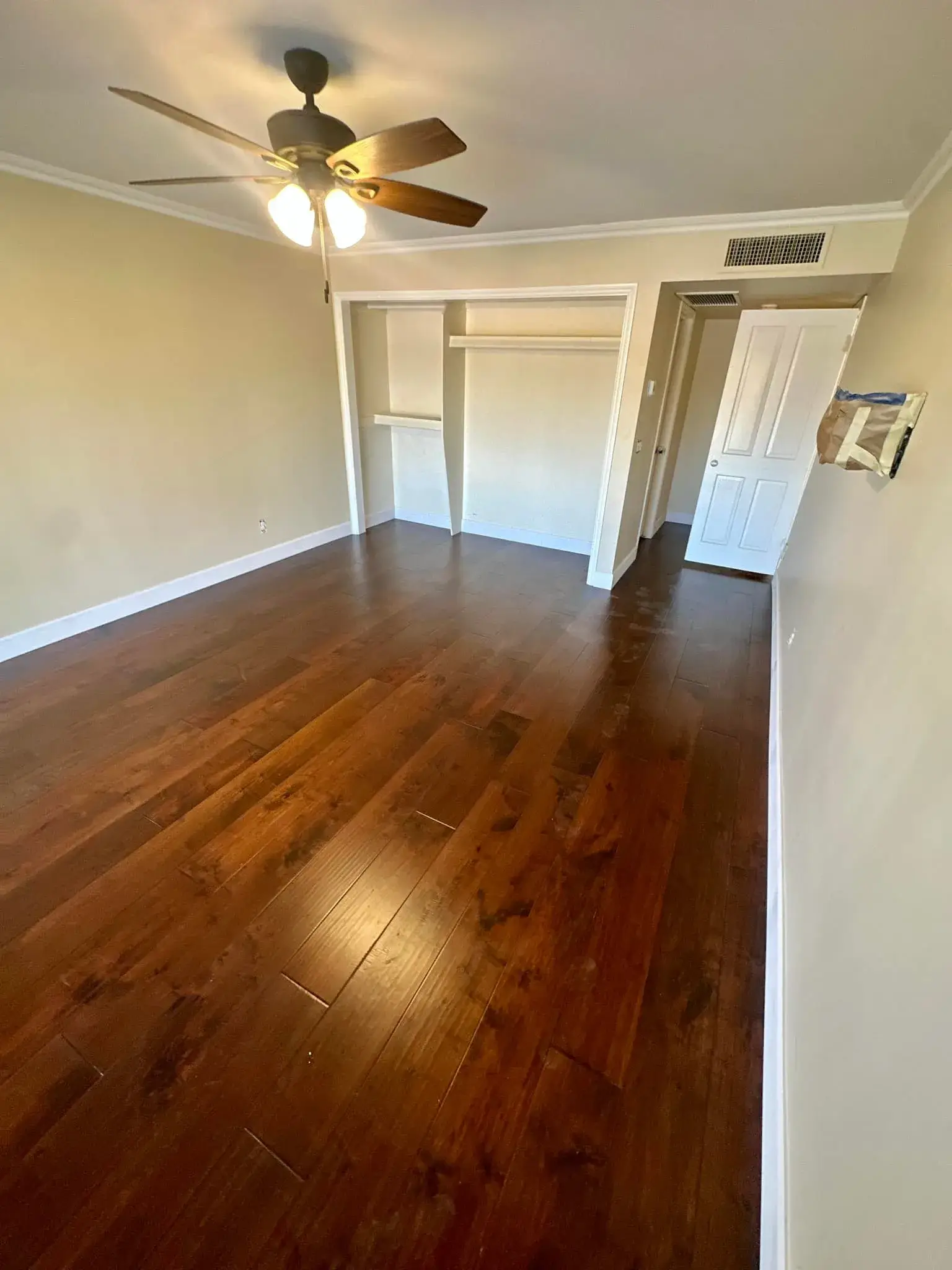
Hardwood flooring has been the standard for premium residential floors for over a century. No synthetic product fully replicates the warmth, depth, and character of real wood — and real hardwood can be sanded and refinished multiple times, giving it a lifespan measured in decades rather than years. In Arizona, choosing hardwood requires understanding how the material behaves in our climate and picking the right product for the right conditions.
Solid Hardwood vs. Engineered Hardwood
The single most important choice you will make with hardwood flooring is whether to go solid or engineered. In most of the country, both are viable options. In Arizona, there is a clear preference.
Solid Hardwood
Solid hardwood is exactly what the name suggests — a single piece of wood milled from a log, typically 3/4” thick. It can be installed nail-down on wood subfloors and can be sanded and refinished many times over its life. In the right conditions, solid hardwood can last a century.
The limitation in Arizona: solid hardwood moves with humidity. Wood is hygroscopic — it absorbs and releases moisture from the surrounding air. In our climate, that means dry, contracted wood in winter and during desert months, and swollen, potentially cupped or buckled wood during monsoon season. Homes on concrete slabs add another complication: solid hardwood cannot be glued to concrete and requires a raised wood subfloor, which adds cost.
Engineered Hardwood
Engineered hardwood has a real wood veneer — typically 2mm to 6mm — bonded to a core of cross-ply plywood or high-density fiberboard. The alternating grain directions in the core counteract the natural tendency of wood to expand and contract. The result is a floor that looks and feels exactly like solid hardwood but behaves more predictably in our climate.
For Arizona homes — particularly those on concrete slab — engineered hardwood is the professional recommendation. It can be glued directly to concrete, handles our temperature and humidity swings far better than solid hardwood, and is available in virtually every species, width, and finish that solid hardwood offers.
The trade-off: engineered hardwood can typically be refinished 2–4 times depending on veneer thickness (vs. 7–10 times for solid hardwood). Given that most floors are refinished once or twice in their lifetime, this is rarely a practical limitation.
Wood Species
The choice of species affects hardness, grain character, color, and price. Here are the most common species we install across the Phoenix metro:
White Oak is currently the most requested hardwood species in Arizona. It has a tight, consistent grain with subtle ray fleck patterns, comes in a wide range of stain colors, and sits comfortably in the mid-range of hardness (Janka rating: 1360). Its neutral, warm undertones work with almost any interior palette, which is why designers specify it in both contemporary and traditional spaces.
Red Oak is the classic American hardwood — slightly softer than white oak, with a more prominent, open grain. Its pinkish undertones limit stain versatility, but it is available at a lower price point and remains a popular choice for traditional-style homes.
Hickory is one of the hardest domestic hardwoods (Janka: 1820) and has the most dramatic grain and color variation of any common species. Its natural character — swinging from creamy sapwood to rich brown heartwood within a single plank — is striking in rustic and transitional interiors. The hardness makes it highly resistant to denting.
Walnut offers deep, rich brown tones with a fine, even grain. It is one of the softer hardwoods (Janka: 1010), which means it shows dents and scratches more than oak or hickory, but its beauty is unmatched for formal and high-end spaces. Walnut is typically used in lower-traffic formal areas.
Maple is pale, with minimal grain variation, and is one of the harder domestic species (Janka: 1450). It is popular in contemporary interiors where a clean, minimal aesthetic is the goal. Maple’s closed grain makes it harder to stain evenly — it is typically installed in its natural color or with light finishes.
Finishes and Textures
Factory-finished hardwood arrives with a baked-on urethane finish applied under controlled conditions. It is ready to walk on immediately after installation, has no VOC off-gassing during installation, and typically carries a longer warranty than site-finished wood. The vast majority of our installations use factory-finished engineered hardwood.
Site-finished hardwood is sanded and finished on-site after installation. This allows for a fully custom stain color and eliminates the micro-beveled edges that most factory-finished planks have. It takes longer, involves VOCs during the finish application period, and requires 24–48 hours of curing time before the space can be used. It is the right choice when a specific color match or seamless look is required.
Surface textures — smooth/hand-scraped/wire-brushed — affect both the look and the durability of the floor. Wire-brushed and hand-scraped surfaces add visual texture and hide minor scratches far better than smooth finishes. They are also more forgiving of small dents. Smooth surfaces show wear more readily but provide a cleaner, more contemporary look.
Installation on Arizona Slabs
Most Arizona homes sit on concrete slab foundations, which presents two challenges for hardwood installation.
Moisture vapor. Concrete emits moisture vapor upward, even in dry climates. Elevated vapor can migrate into wood flooring and cause cupping, staining, and adhesive failure. Before any hardwood installation on slab, we perform a calcium chloride or in-situ relative humidity test. If readings are elevated, we use a moisture-mitigating adhesive or apply a vapor barrier system before the flooring goes down. This is a non-negotiable step.
Flatness. Engineered hardwood tolerates less subfloor variation than LVP. Most manufacturers require the slab to be within 3/16” of variation over 10 feet. Concrete slabs in older homes often have high spots, low spots, and cracks that need grinding, patching, or leveling before installation. Our guide on subfloor leveling and preparation explains what proper prep involves and when it’s needed.
Maintenance
Real hardwood requires more care than LVP or laminate, but it rewards that care with beauty that improves with age.
- Sweep or vacuum regularly using a hardwood-safe attachment (avoid beater bars).
- Clean spills immediately — water and hardwood are not friends long-term, even with protective finishes.
- Use a wood-specific cleaner (not general-purpose floor cleaners, which can leave residue or damage finishes over time).
- Control indoor humidity — keep interior humidity between 35–55% year-round. In Arizona, this often means running humidifiers in winter when forced-air heating dries the air significantly.
- Refinish every 10–15 years or when the finish shows significant wear. This is what makes hardwood unique — no other flooring material can be brought back to like-new condition this way.
Zona Floors installs engineered and solid hardwood across Tempe, Phoenix, and Maricopa County. We bring samples to your home, test your subfloor for moisture, and guide you toward the product that will actually perform in your specific space. If you’ve already purchased materials, our installation-only service provides the same expert labor and workmanship guarantee. Considering luxury vinyl plank as an alternative? It offers 100% waterproofing and similar aesthetics at a lower price point — worth comparing before you commit. For budgeting help, see our guide on flooring installation costs in Maricopa County.